Plastic pollution is a growing environmental challenge that affects wildlife, ecosystems, and human health. According to the United Nations Environment Programme (UNEP), the world produces more than 400 million tonnes of plastic annually, much of which eventually becomes waste. Therefore, students, parents, and teachers must work together to reduce plastic waste and encourage sustainable habits. Simple actions, such as avoiding disposable plastic products and separating recyclable materials, can make a meaningful difference. Additionally, professional Plastic Waste Recycling services can help manage recyclable materials responsibly. By developing environmentally friendly habits at home and school, students can become responsible citizens and contribute to a cleaner future.
Why Is It Important to Reduce Plastic Waste at Home & School?
Plastic products are widely used in school supplies, food packaging, shopping bags, and household items. However, improper disposal can cause pollution and harm animals. Furthermore, plastic waste that enters rivers and oceans can threaten aquatic ecosystems.
Schools and homes are ideal places to develop sustainable habits because students learn through everyday experiences. Reducing plastic waste can be achieved, for instance, by carrying reusable water bottles and avoiding needless plastic packaging.
Moreover, these practices encourage students to understand the importance of resource conservation, responsible consumption, and recycling. As a result, small behavioural changes can inspire families, classmates, and communities to adopt environmentally friendly lifestyles.
7 Ways Students Can Reduce Plastic Waste
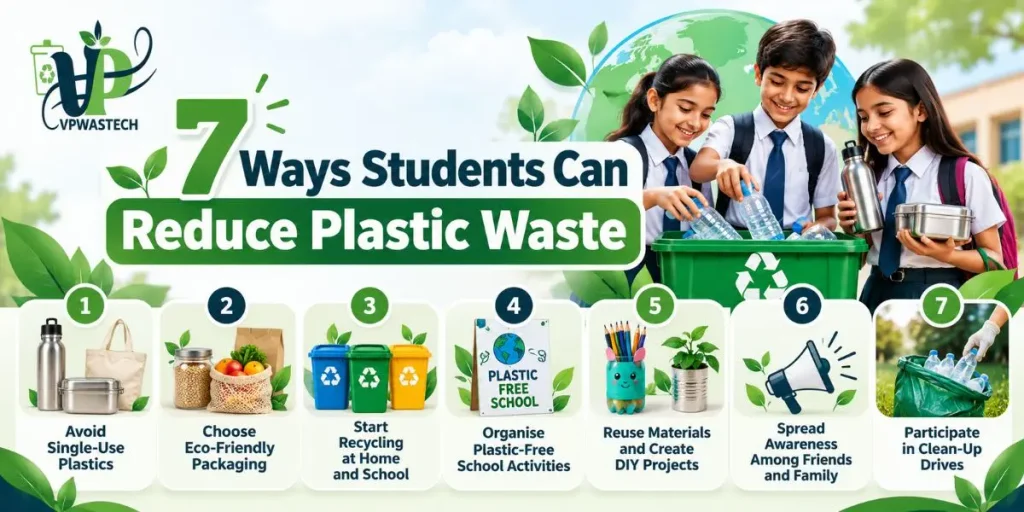
1. Avoid Single-Use Plastic Products
Single-use plastics, including disposable cups, straws, plastic bags, and food wrappers, are frequently used for convenience. However, many of these products are discarded after a short period.
Instead, students can carry reusable water bottles, lunchboxes, and shopping bags. Additionally, they can choose reusable cutlery instead of disposable alternatives whenever possible.
By making these simple changes, students can reduce plastic waste and prevent unnecessary plastic consumption. Furthermore, reusable products can become a regular part of their daily routines.
2. Choose Eco-Friendly Packaging
One of the main sources of plastic waste is food packaging. Therefore, students should encourage their families to select products with minimal packaging whenever practical.
For example, families can purchase loose fruits and vegetables, carry reusable shopping bags, and store food in reusable containers. Similarly, students can avoid individually wrapped snacks when suitable alternatives are available.
These purchases can therefore encourage companies to think about more environmentally friendly packaging solutions while also assisting in the reduction of plastic waste.
3. Start Recycling at Home and School
Recycling is another important step towards responsible plastic disposal. However, not every plastic item is accepted by every recycling facility. Therefore, students should follow local recycling guidelines and separate accepted recyclable materials from general waste.
At school, students can request clearly labelled recycling bins. Meanwhile, at home, families can establish separate collection points for recyclable materials.
Before placing containers in recycling bins, students should follow local instructions regarding cleaning and preparation. Furthermore, schools can connect with authorised waste collection organisations to arrange appropriate collection.
These plastic waste management strategies can improve waste segregation and encourage responsible disposal practices.
4. Organise Plastic-Free School Activities
Schools can make environmental education more engaging through practical activities. For instance, students can organise plastic-free lunch days, poster competitions, environmental quizzes, and classroom discussions.
Additionally, eco-clubs can encourage students to bring reusable bottles and lunch containers instead of disposable products.
Teachers can also introduce classroom challenges that reward students for making sustainable choices. Consequently, these activities can motivate students to reduce plastic waste while making environmental responsibility a shared goal.
5. Reuse Materials and Create DIY Projects
Before throwing away plastic containers, students should consider whether they can be safely reused. For example, suitable containers can be transformed into craft materials, pen holders, or organisers.
Similarly, students can use old materials for educational projects rather than purchasing new items unnecessarily.
However, reuse should not encourage the collection of unsafe or unsuitable plastic products. Students should follow teacher guidance and avoid materials that could cause injury.
Students can lessen the amount of plastic waste produced by daily activities and learn the importance of recycling resources through creative projects.
6. Spread Awareness Among Friends and Family
Environmental awareness becomes more effective when students share their knowledge with others. Therefore, they can discuss plastic pollution with family members, friends, and classmates.
For example, students can prepare presentations explaining why reusable products are preferable to unnecessary disposable items. They can also encourage family members to purchase with reusable bags.
Schools can also invite environmental educators to explain responsible waste disposal and recycling. Additionally, companies that offer Plastic Waste Compliance Management can assist schools in comprehending the significance of proper waste management and relevant plastic waste regulations.
As awareness increases, more people may adopt sustainable habits and contribute to reducing pollution.
7. Participate in Clean-Up Drives
School clean-up drives and community campaigns provide practical opportunities to protect the environment. During these activities, students can help collect litter under adult supervision and learn why waste should never be discarded carelessly.
However, students should avoid handling sharp, contaminated, or hazardous waste directly. Instead, trained adults should manage potentially dangerous materials.
Schools can also collaborate with suitable recycling organisations. For instance, institutions seeking Plastic Waste Recycling Services in Noida can explore appropriate service providers to support the collection and responsible handling of recyclable plastic waste.
Consequently, community participation can strengthen environmental awareness and encourage students to reduce plastic waste beyond their homes and classrooms.
How Can Schools Encourage Long-Term Change?
Schools can establish practical environmental policies that make sustainable behaviour easier. First, they can discourage unnecessary single-use plastics during school events. They can then implement trash segregation systems and offer precise disposal guidelines.
Additionally, teachers can include environmental topics in classroom activities and encourage students to suggest improvements. Schools can discover frequently discarded plastic products by conducting routine trash audits.
Most importantly, schools should work with parents, staff members, and authorised waste management organisations. Through consistent cooperation, these measures can create a culture of environmental responsibility.
Conclusion
Students have an important role in building a cleaner and healthier environment. By avoiding disposable products, choosing reusable alternatives, sorting recyclable materials, and participating in awareness campaigns, they can reduce plastic waste at home and school.
Furthermore, schools can support these efforts through environmental education, recycling facilities, and community partnerships. Families can also reinforce these habits by making sustainable choices during shopping and everyday activities.
Ultimately, lasting change begins with small, consistent actions. When students practise responsible consumption and encourage others to follow their example, they help protect natural resources and create a more sustainable future for everyone.