Urban waste is a growing part of modern city life. Homes, shops, offices, institutions, public spaces, and municipal services all generate discarded materials. The reference material describes municipal solid waste as waste from homes, businesses, offices, and recreational spaces, including food scraps, packaging, paper, plastic, glass, and metals. Similarly, UNEP explains that municipal waste can include waste from households, commerce, offices, institutions, parks, gardens, and street-cleaning activities. Therefore, understanding urban waste is essential for cleaner communities and better resource recovery.
What Is Urban Waste?
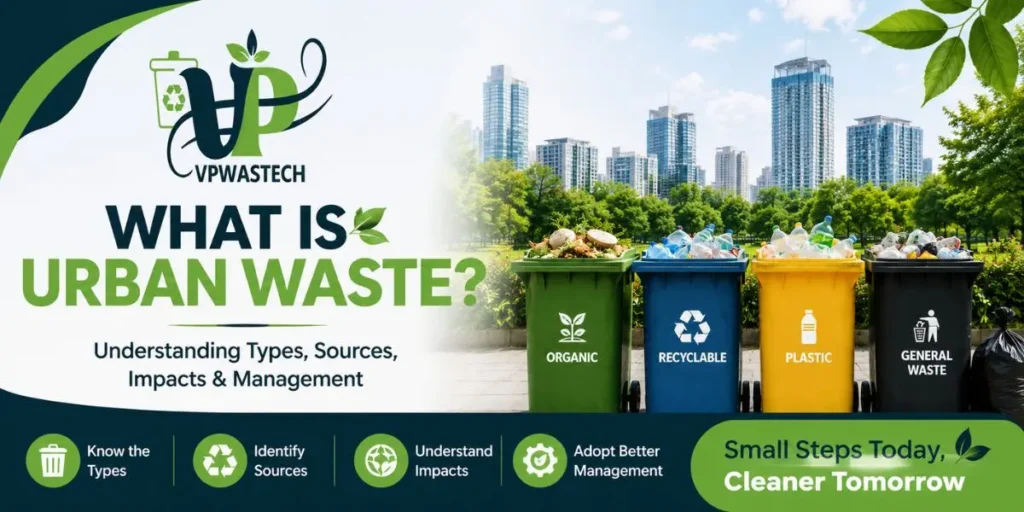
Urban waste refers to discarded solid materials generated through everyday activities in towns and cities. In simple terms, it includes materials that people, businesses, and public services no longer need. For example, food leftovers, paper, cardboard, plastic packaging, glass, and metals can enter the municipal waste stream.
However, the exact definition can vary between countries and waste-management systems. UNEP notes that municipal waste generally covers materials handled by municipal waste-management systems. It may also include bulky items, park and garden waste, street sweepings, and market-cleaning waste when managed as waste.
Main Types of Urban Waste
The composition of urban waste varies according to consumption patterns and daily activities. Nevertheless, several common categories appear in city waste streams.
Organic Waste
Organic waste includes biodegradable materials such as food scraps, plant products, and other biological matter. The reference states that organic material can represent approximately 50% of municipal solid waste in many cities and has strong potential for composting. Therefore, separating organic materials can support composting and reduce disposal volumes.
Recyclable Waste
Recyclable waste includes paper, cardboard, plastics, glass, and metals. When residents separate these materials correctly, recycling facilities can recover valuable resources more efficiently. Moreover, recycling reduces the amount of recoverable material sent for disposal.
Hazardous Waste
Some household materials need special handling because they may pose risks to health or the environment. Batteries, chemicals, and certain electronic items are examples identified in the reference. Consequently, these materials should not simply be mixed with ordinary household waste.
Sources of Urban Waste
Urban waste comes from many parts of city life. Households are a major source and generate mixtures of organic, recyclable, and non-recyclable materials. In addition, shops and offices generate paper, cardboard, plastics, and other materials, while cafeterias can produce organic waste.
Public spaces and events also contribute. Parks, squares, recreational areas, and mass gatherings can generate significant quantities of waste, particularly disposable packaging. For this reason, organized Waste Collection Services can help maintain cleaner public areas and support efficient waste handling.
Why Is Urban Waste Management Important?
Poorly managed urban waste can affect communities and ecosystems. UNEP states that ineffective collection and disposal can cause air pollution and contaminate water and soil. Furthermore, uncollected waste can enter drains, contribute to blockages and flooding, and create unsanitary conditions.
The reference also explains that leachate from decomposing waste can contaminate soil and groundwater. Moreover, anaerobic decomposition of organic material produces methane, a greenhouse gas. Therefore, cities need systems that prioritize prevention, segregation, recycling, composting, and controlled disposal.
How Can Cities Manage Urban Waste Better?
Effective management starts with reducing waste at the source. Households and businesses can choose reusable products, avoid unnecessary packaging, and adopt responsible consumption practices. Next, source segregation can keep recyclable and organic materials separate, making recovery and treatment easier.
Collection and transportation are equally important. The reference recommends differentiated collection systems, optimized transport routes, and trained personnel. Additionally, smart containers and automated separation systems can improve collection and recycling efficiency.
For businesses seeking organized local waste handling, Waste Collection Services in Noida can support systematic collection and movement of waste when combined with proper segregation, transportation, and treatment practices.
What Happens After Collection?
After collection, urban waste can undergo different treatment processes depending on its composition. Composting converts organic material into compost, while recycling processes materials such as paper, plastic, and glass for potential use in new products.
Some residual waste may require landfill disposal. Properly designed landfills can include waterproofing, drainage systems, environmental monitoring, and gas recovery measures. Thus, treatment and final disposal should form part of an integrated waste-management system rather than relying on uncontrolled dumping.
Role of Citizens, Businesses, and Governments
Managing urban waste effectively requires cooperation. Governments can establish policies, collection systems, and recycling programs, while businesses can reduce waste and support responsible material handling. Meanwhile, citizens can separate waste, reduce unnecessary consumption, reuse materials, and participate in recycling programs.
Environmental education is equally important. The reference highlights awareness campaigns, workshops, and community activities as ways to encourage recycling and sustainable practices. As a result, waste management becomes a shared responsibility rather than a task handled only by municipal authorities.
Conclusion
Urban waste is not simply garbage that needs to disappear. Instead, it is a mixture of materials generated through households, businesses, institutions, public spaces, and municipal activities. When cities separate materials correctly, recover recyclables, compost organic matter, and control final disposal, they can reduce environmental risks and conserve resources. UNEP also emphasizes waste prevention, reuse, recycling, and improved management as important parts of a sustainable approach.
Therefore, communities and businesses should focus on responsible generation, segregation, collection, treatment, and recovery. For organizations seeking dependable local support, Reliable Waste Collection Services in Noida can contribute to a broader and more responsible waste-management approach.