Electronic devices have become essential in our daily lives. Smartphones, laptops, televisions, printers, and household appliances make everyday activities easier. However, as technology advances, older devices often become unwanted. Consequently, electronic waste continues to grow worldwide.
Disposing of E Waste responsibly is essential for protecting the environment, conserving natural resources, and reducing health risks. Instead of throwing old electronics into regular dustbins, consumers and businesses should choose authorized collection and recycling channels.
For individuals and businesses looking for E Waste Management Solutions in Noida, responsible recycling provides a practical way to manage unwanted electronic products. This guide explains safe disposal practices, environmental benefits, and important steps for managing electronic waste.
Why Is Responsible E-Waste Disposal Important?
Electronic waste, commonly known as e-waste, includes discarded electrical and electronic equipment and their components. Examples include computers, mobile phones, keyboards, televisions, and printers.
The Global E-waste Monitor 2024 reported that approximately 62 million tonnes of electronic waste were generated worldwide in 2022. However, only 22.3% was documented as formally collected and recycled in an environmentally sound manner.
ITU+1
This growing waste stream makes Disposing of E Waste a shared responsibility.
Improper disposal can create several environmental problems:
- Soil contamination: Hazardous substances from discarded electronics can enter the surrounding environment when waste is handled improperly.
- Water pollution: Unsafe dumping and processing can allow harmful substances to contaminate water sources.
- Air pollution: Open burning of electronic waste can release toxic pollutants.
- Resource wastage: Electronics contain valuable materials, including copper, gold, and other recoverable metals.
Therefore, responsible recycling helps reduce pollution risks while supporting better resource management.
How to Dispose of E-Waste Responsibly
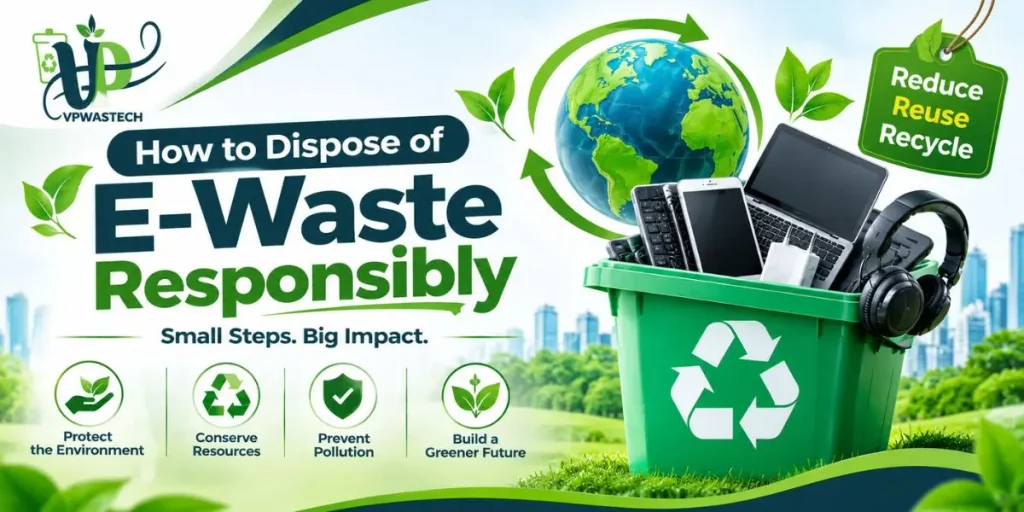
Consumers can follow several practical steps to manage unwanted electronics safely. Moreover, these practices help extend product life and improve recycling outcomes.
1. Use Authorized E-Waste Collection Channels
Always look for authorized collection options before discarding electronic products. Many manufacturers and electronics brands provide take-back or collection arrangements.
Additionally, consumers can contact registered recyclers to understand accepted devices and collection procedures. Choose a recycling channel that follows applicable environmental requirements.
2. Donate or Reuse Working Electronics
Not every old electronic device needs immediate recycling. If a laptop, mobile phone, or television still works, consider donating it to someone who needs it.
Similarly, repairable devices can receive a second life through maintenance or refurbishment. As a result, reuse reduces unnecessary waste and delays the need for replacement products.
3. Remove Personal Data Before Disposal
Data security is another important part of responsible electronic waste management.
Before handing over a phone, laptop, tablet, or computer:
- Back up important files.
- Sign out of personal accounts.
- Remove SIM and memory cards.
- Perform a factory reset where appropriate.
- Follow secure data-erasure procedures for computers and storage devices.
Furthermore, businesses should arrange verified data destruction before releasing equipment containing confidential information.
4. Keep Electronic Waste Separate
Never mix electronic waste with everyday household garbage. Instead, store unwanted electronics separately in a dry and secure location.
Also, avoid dismantling devices yourself. Batteries and damaged electronic components require appropriate handling. Therefore, allow trained professionals to manage collection and processing.
Responsible E-Waste Management for Businesses
Businesses generate electronic waste through regular technology upgrades and equipment replacement. Offices, educational institutions, factories, and commercial establishments may discard computers, printers, servers, and communication equipment.
Consequently, organizations need a planned disposal process.
Choose Registered Recycling Partners
Businesses should work with recyclers registered under the applicable E-Waste (Management) Rules, 2022. These rules establish registration and Extended Producer Responsibility requirements for covered entities.
ePreWaste+1
Organizations searching for the Best E Waste Management Solutions in Noida should evaluate service providers carefully.
Consider these factors:
- Valid CPCB registration, where applicable.
- Secure collection and transportation practices.
- Responsible recycling and material recovery.
- Data destruction arrangements.
- Proper records and supporting documentation.
- Transparent collection and processing procedures.
Moreover, businesses should request relevant documentation after handing over electronic waste. This helps maintain internal records and demonstrate responsible disposal practices.
Understand India’s E-Waste Management Rules
India introduced the E-Waste (Management) Rules, 2022, which came into force on April first, 2023. The framework includes Extended Producer Responsibility (EPR) requirements for producers and registration provisions for manufacturers, producers, refurbishers, and recyclers.
IndiaCode+1
The Central Pollution Control Board (CPCB) operates an online EPR portal for relevant stakeholders.
Businesses should understand their applicable responsibilities and consult official CPCB guidance when planning compliance activities.
ePreWaste+1
Environmental Benefits of Proper E-Waste Recycling
Responsible Disposing of E Waste offers several long-term benefits. It supports environmental protection while encouraging more efficient use of natural resources.
Here are some important advantages:
1. Conserves Valuable Natural Resources
Electronic products contain reusable materials such as copper, aluminium, gold, and other metals. Recycling helps recover these materials for future manufacturing.
Consequently, manufacturers can reduce their dependence on newly extracted raw materials.
2. Reduces Environmental Pollution
Proper recycling prevents electronic waste from entering unsuitable disposal sites. Furthermore, controlled processing reduces the risks associated with unsafe dismantling and open burning.
3. Supports a Circular Economy
A circular economy focuses on repairing, reusing, refurbishing, and recycling products. Instead of treating old electronics as useless waste, this approach gives recoverable materials another purpose.
As a result, responsible Disposing of E Waste supports more sustainable production and consumption.
4. Creates Employment Opportunities
The recycling sector requires workers for collection, transportation, sorting, refurbishment, and material recovery. Therefore, responsible electronic waste management can support employment across different stages of the recycling industry.
Practical Tips to Reduce E-Waste Generation
Apart from recycling, consumers can reduce electronic waste through simple everyday decisions.
- Repair before replacing: Check whether a damaged device can be repaired economically.
- Choose durable products: Consider product quality, repairability, and expected lifespan before purchasing electronics.
- Avoid unnecessary upgrades: Replace devices only when necessary.
- Donate usable devices: Give functional electronics to individuals or organizations that can reuse them.
- Spread awareness: Encourage family members, employees, and colleagues to follow responsible disposal practices.
Additionally, businesses can maintain an electronic asset inventory. This makes it easier to identify equipment for reuse, refurbishment, or recycling.
When planning Disposing of E Waste, these small steps can make electronic waste management more organized and effective.
Conclusion
Electronic waste requires careful handling from consumers and businesses alike. Therefore, everyone should understand the importance of recycling, reusing, and choosing appropriate collection channels.
Disposing of E Waste through responsible recycling practices helps protect natural resources, reduce pollution risks, and support a cleaner environment. Moreover, businesses should follow applicable regulations and work with registered recycling partners.
For organizations seeking reliable e waste management solutions, choosing an experienced and authorized service provider can simplify electronic waste handling.
Ultimately, responsible decisions today can create a healthier and more sustainable tomorrow. Every electronic device handled correctly brings us one step closer to a cleaner future.