Waste management plays an essential role in maintaining a clean, healthy, and sustainable community. Every day, households, offices, shops, and industries generate waste that requires responsible disposal. However, poor waste-handling practices can create serious environmental and public health problems. Therefore, communities must adopt better waste disposal habits to protect their surroundings.
Proper Waste Management helps reduce pollution, conserve natural resources, and improve overall living conditions. Moreover, it encourages people to take responsibility for the waste they generate. With support from professional Waste Collection Services, residents can ensure that everyday garbage reaches appropriate collection and processing facilities.
In growing cities like Noida, effective waste management has become increasingly important. VP Wastech believes that responsible waste handling, recycling, and public awareness can contribute to cleaner and healthier communities.
1. Reducing Pollution Through Proper Waste Management
One of the biggest benefits of Proper Waste Management is pollution reduction. When people throw garbage into open spaces, drains, rivers, or vacant plots, it can contaminate the surrounding environment. Plastic waste, chemical materials, and other discarded items can also harm wildlife and damage natural ecosystems.
However, communities can reduce these problems by following simple waste management practices. For example, residents should separate recyclable materials, dispose of household waste responsibly, and avoid littering in public places.
Furthermore, recycling helps reduce the demand for new raw materials. It also lowers the amount of waste sent to landfills. As a result, communities can protect natural resources while creating a cleaner environment for future generations.
2. Protecting Public Health and Hygiene
Poor waste disposal does not only affect the environment. It can also create serious health and hygiene concerns. Accumulated garbage attracts flies, mosquitoes, rats, and other pests. Additionally, decomposing organic waste can produce unpleasant smells and create unhygienic surroundings.
For instance, blocked drains caused by plastic bags and other discarded materials can contribute to waterlogging during the rainy season. Similarly, exposed waste can increase people’s contact with harmful microorganisms.
Therefore, Proper Waste Management is necessary to maintain healthier neighbourhoods. Regular garbage collection, proper waste segregation, and timely disposal can reduce these risks. Moreover, residents should avoid burning household waste because it releases harmful pollutants into the air.
3. Reducing Pressure on Landfills
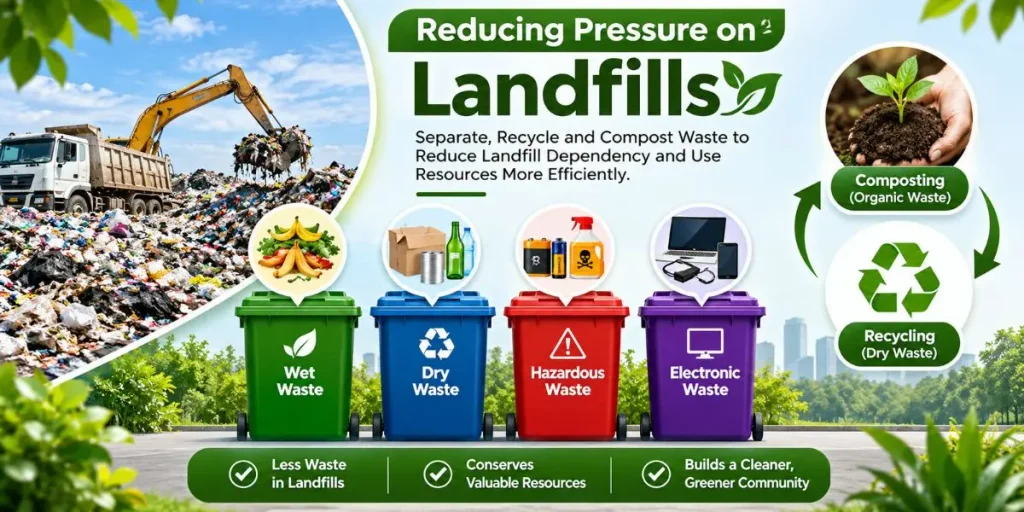
Landfills receive large quantities of household, commercial, and industrial waste. However, when recyclable and compostable materials are mixed with general garbage, valuable resources are unnecessarily sent to disposal sites.
This creates additional pressure on existing landfill facilities. Consequently, cities may face difficulties managing increasing waste volumes.
Communities can address this challenge by separating waste into different categories:
- Wet Waste: Food scraps, vegetable peels, and garden waste.
- Dry Waste: Paper, cardboard, plastic, glass, and metal.
- Hazardous Waste: Batteries, chemicals, and certain household products.
- Electronic Waste: Old computers, mobile phones, chargers, and electronic equipment.
Moreover, composting organic waste can turn biodegradable materials into useful compost. Recycling dry waste also allows valuable materials to re-enter the production cycle.
Therefore, Proper Waste Management helps reduce landfill dependency and supports a more resource-efficient community.
4. Encouraging Recycling and Responsible Waste Disposal
Recycling is one of the most effective ways to reduce waste and conserve natural resources. Instead of throwing away useful materials, communities can recycle paper, plastic, glass, and metals. These materials can then be processed and used to manufacture new products.
However, many people are still unsure about how and where to recycle household materials. For example, residents often search online for “where can i send plastic for recycling” when they want to dispose of plastic bottles, packaging, and containers responsibly.
To make recycling easier, communities should promote collection points, recycling awareness campaigns, and partnerships with authorised waste management organisations.
Additionally, residents should understand the importance of separating recyclable materials before disposal. This simple habit improves recycling efficiency and reduces unnecessary landfill waste.
5. The Role of Professional Waste Collection Services
An organised waste collection system is essential for maintaining clean neighbourhoods. Although individual efforts matter, professional waste management support makes community-wide waste handling more efficient.
In rapidly developing areas, Waste Collection Services in Noida can help support organised waste collection and responsible disposal. These services play an important role in managing everyday waste generated by residential societies, commercial establishments, and other facilities.
Furthermore, professional waste management organisations can encourage better segregation practices and help direct recyclable materials towards appropriate processing channels.
Here are some important responsibilities of an effective waste collection system:
- Collecting waste regularly from designated locations.
- Encouraging residents to separate wet and dry waste.
- Supporting responsible transportation and disposal.
- Promoting recycling and resource recovery.
- Creating awareness about environmentally responsible habits.
Moreover, Proper Waste Management becomes easier when residents, businesses, and waste management organisations work together. VP Wastech supports the importance of responsible waste handling and sustainable waste management practices.
6. Creating Economic Opportunities Through Waste Management
Waste management also offers economic benefits to communities. Recycling and waste processing activities can create employment opportunities in collection, transportation, sorting, processing, and material recovery.
For example, recyclable materials such as paper, plastic, aluminium, and other metals can become valuable resources for manufacturing industries. Consequently, recycling supports resource conservation while contributing to economic activity.
Additionally, community composting initiatives can provide useful organic compost for gardens, parks, and agricultural applications.
Proper Waste Management also encourages businesses to adopt sustainable practices. By reducing unnecessary waste and reusing available materials, organisations can improve resource efficiency and support long-term environmental goals.
7. How Communities Can Improve Waste Management Practices
Building a cleaner community requires consistent participation from everyone. Although professional support is important, individual habits also make a significant difference.
Here are some practical steps residents can follow:
- Segregate Waste: Separate wet, dry, and hazardous waste at home.
- Reduce Plastic Usage: Choose reusable bags, bottles, and containers.
- Recycle Regularly: Send recyclable materials to appropriate collection facilities.
- Avoid Littering: Keep streets, parks, and public spaces clean.
- Spread Awareness: Encourage neighbours and family members to adopt responsible disposal habits.
- Compost Organic Waste: Convert suitable kitchen and garden waste into compost.
Furthermore, housing societies and community organisations can arrange awareness programmes to educate residents about waste segregation and recycling.
When people follow these practices consistently, Proper Waste Management becomes a shared responsibility rather than an individual effort.
Conclusion
A clean and healthy community begins with responsible waste disposal. From reducing pollution and protecting public health to conserving resources and creating economic opportunities, Proper Waste Management offers long-term benefits for everyone.
However, achieving these goals requires cooperation between residents, businesses, and professional waste management organisations. Choosing Reliable Waste Collection Services can support organised waste handling and encourage sustainable disposal practices.
VP Wastech believes that every small effort can make a meaningful difference. By adopting responsible habits, promoting recycling, and supporting better waste collection systems, we can build cleaner neighbourhoods and a more sustainable future for generations to come.